

Walking into the exhibition, Grounded in Grain, Washed in the Water, enchanting sounds play throughout the gallery, inviting visitors to immerse themselves into the space. This exhibition immediately creates an environment that feels intentional and allows guests to slow down as they take in the pieces around them.
This exhibit explores Black Southern history and cultural traditions that are carried through land, water, materials, and memory with the works of Maya Freelon, Corey Alston, christa david, and Derrick Beasley, guest-curated by Lauren Jackson Harris. The Halsey Institute of Contemporary Art collaborated with the Avery Research Center for African American History and Culture for this exhibition. The Avery Research Center preserves records of African American life, while the Halsey activates these histories beyond texts through contemporary art.
While each artist uses different techniques and materials, their work is connected through themes of memory, resilience, connections to land, ancestral narratives, and spirituality.
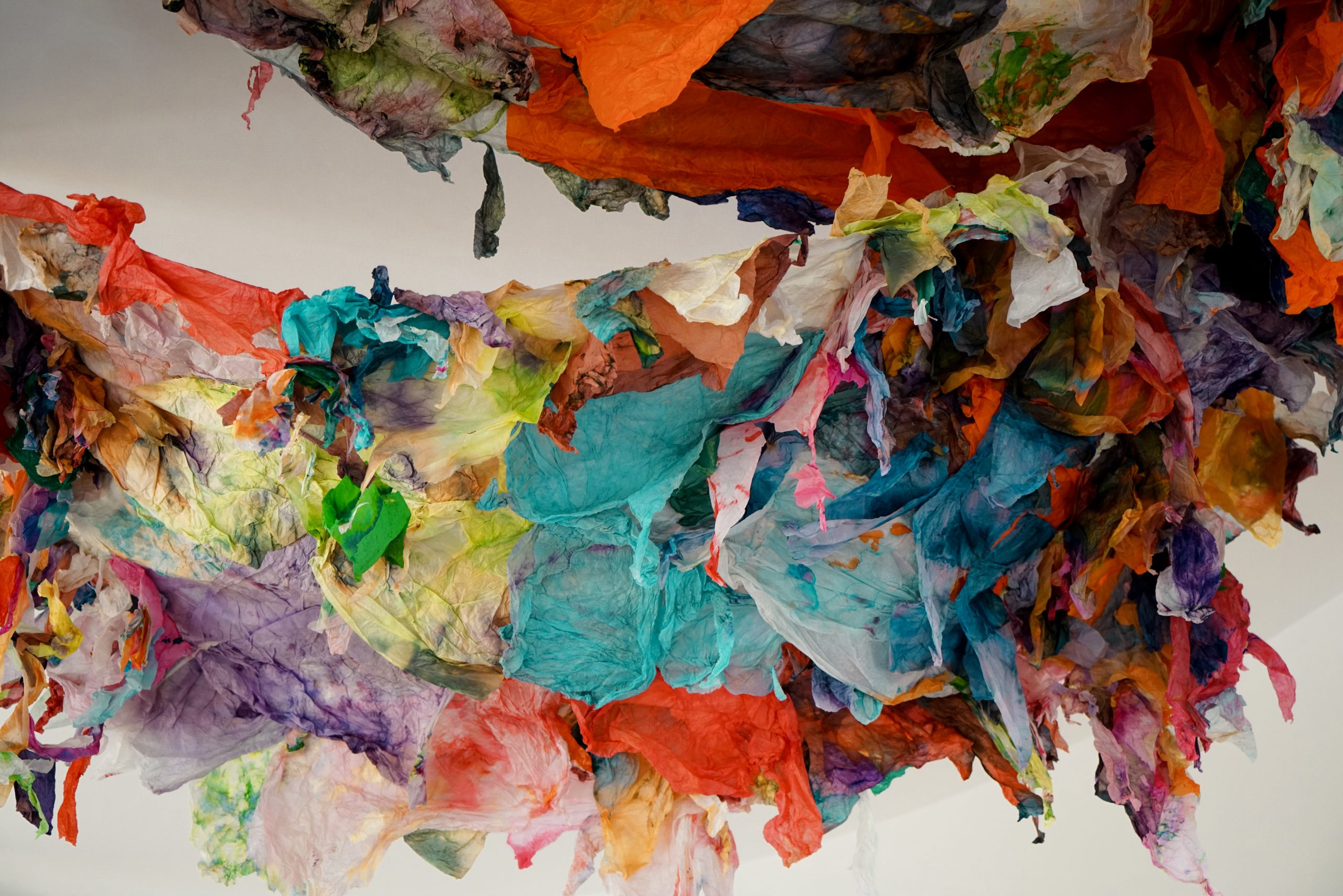
Maya Freelon uses tissue paper and water-based processes to explore the fragility and resilience of the African diaspora. In Love Outpouring, Freelon transforms the fragile qualities of tissue paper by adhering the material into quilt-like forms, showing the strength of tissue paper when layered. This artistic expression serves as an analogy for Black communities who have persisted through generations of fracturing and displacement.
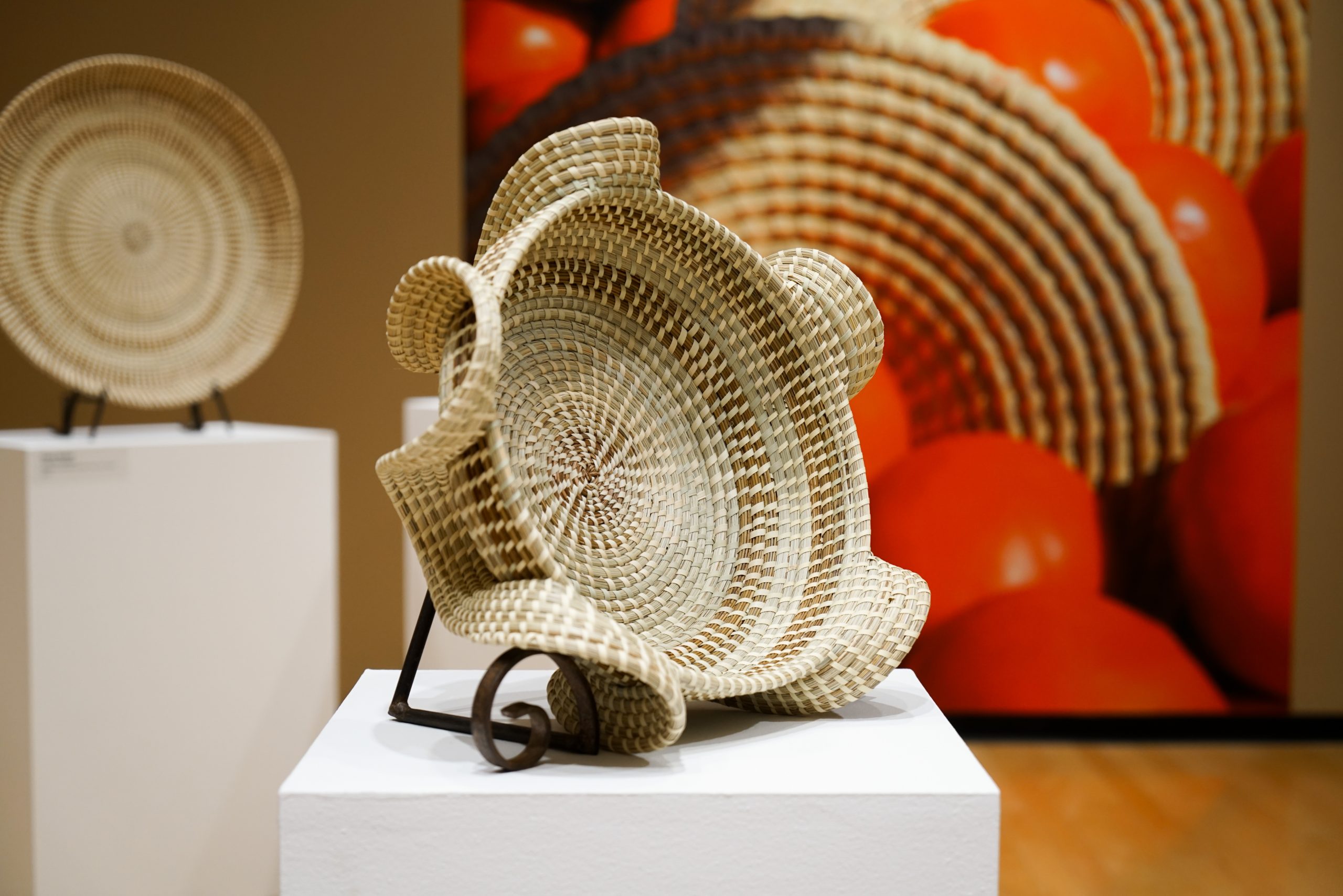
Corey Alston displays works of sweetgrass basketry, such as 5-leg Elephant Ear, a significant part of Gullah Geechee Culture with origins in West Africa prior to the days of enslavement.
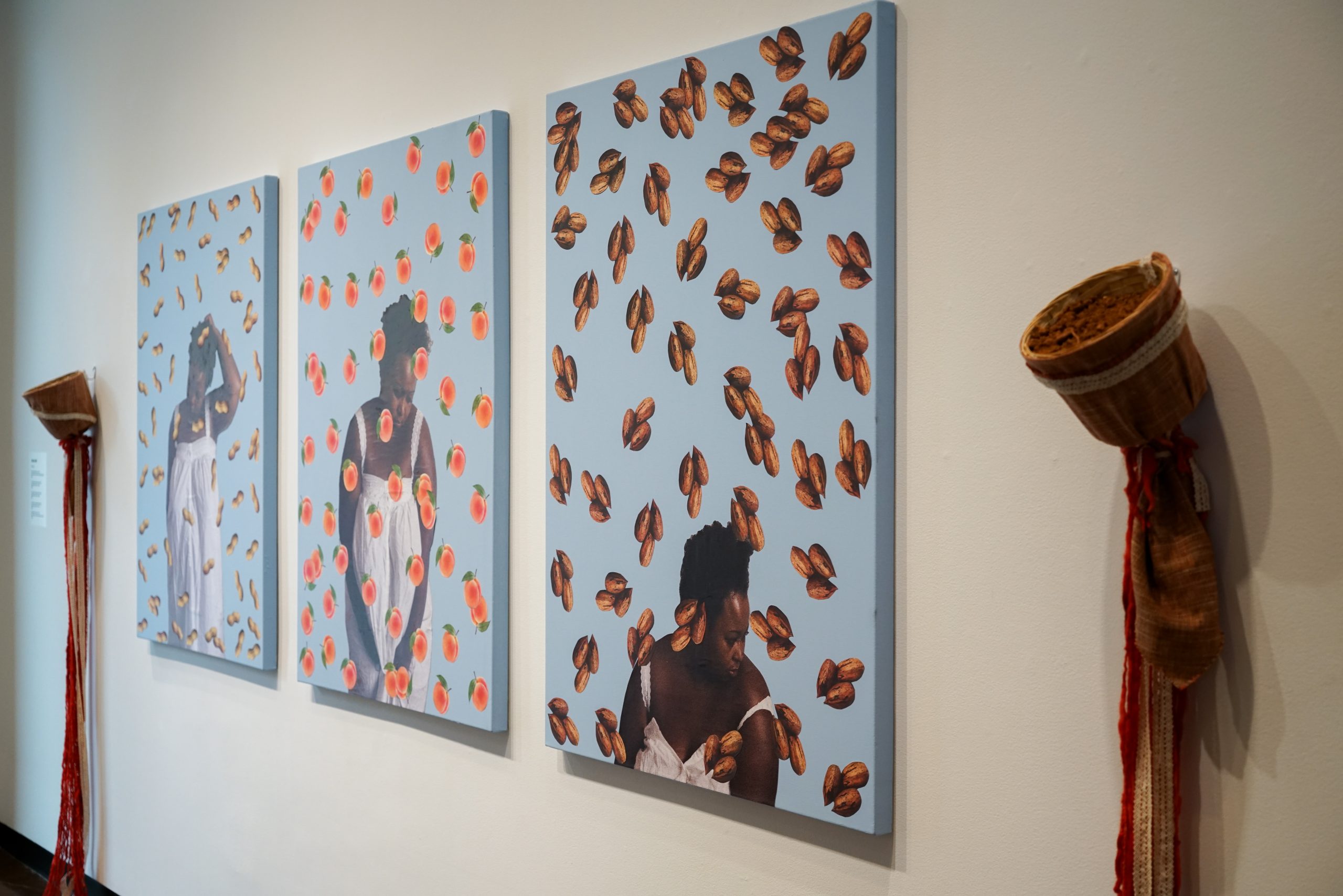
christa david uses collages, paintings, and fiber sculpture to convey a meditative sentiment. Her use of pecans and haint blue in some things arrive already knowing me (i), ties into her Southern upbringing and traditions of protection, highlighting the narrative that the land and materials around us carry historical significance. Derrick Beasley uses photography, sculpture, and video to imagine a future world that is based on reciprocity and connection to land. He connects wetlands to Black history as places of refuge and innovation.
Taking a closer look into Derrick Beasley’s pieces, he showcases a future world called the Reciprocene, where there is mutual care between humans and the more-than-human world. A world that embodies cooperation with the land versus domination. He provokes the question: What knowledge is needed to enable humanity to survive climate catastrophes?
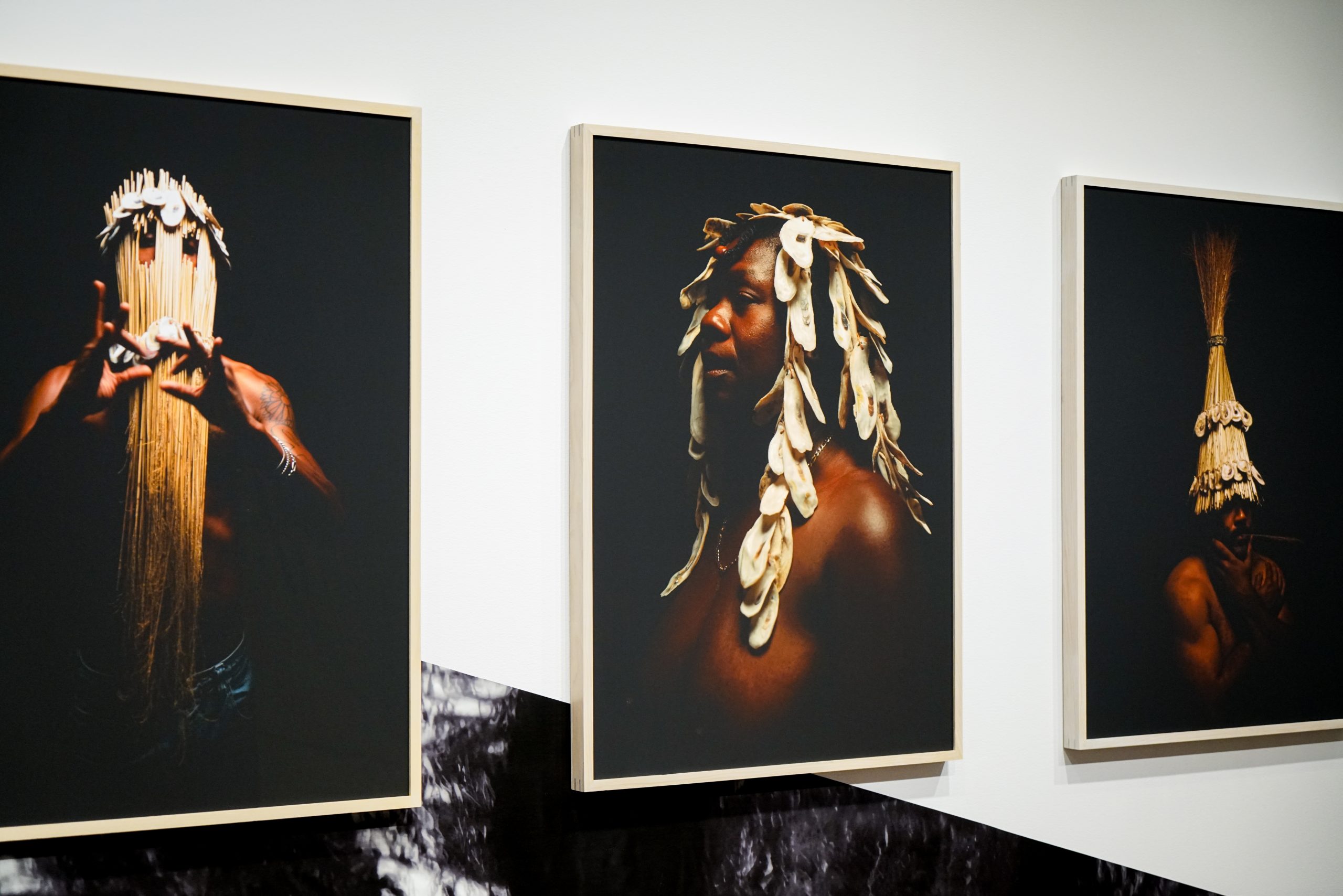
In Beasley’s photographs entitled A Seasoned Guy, A Steward, and A Young Evelyn or a Mamie, A Decision Maker, and A Wiser Older Man, men and women wear oyster shells as clothing, connecting with the materials around them and intersecting human life with the environment. Close by, Steward’s Armour presents a figure wearing a black cloak covered in oyster shells as armor, showcasing how powerful cooperation with the natural world can be. His artwork ties into cultural practices that have been shaped by perseverance and strength.
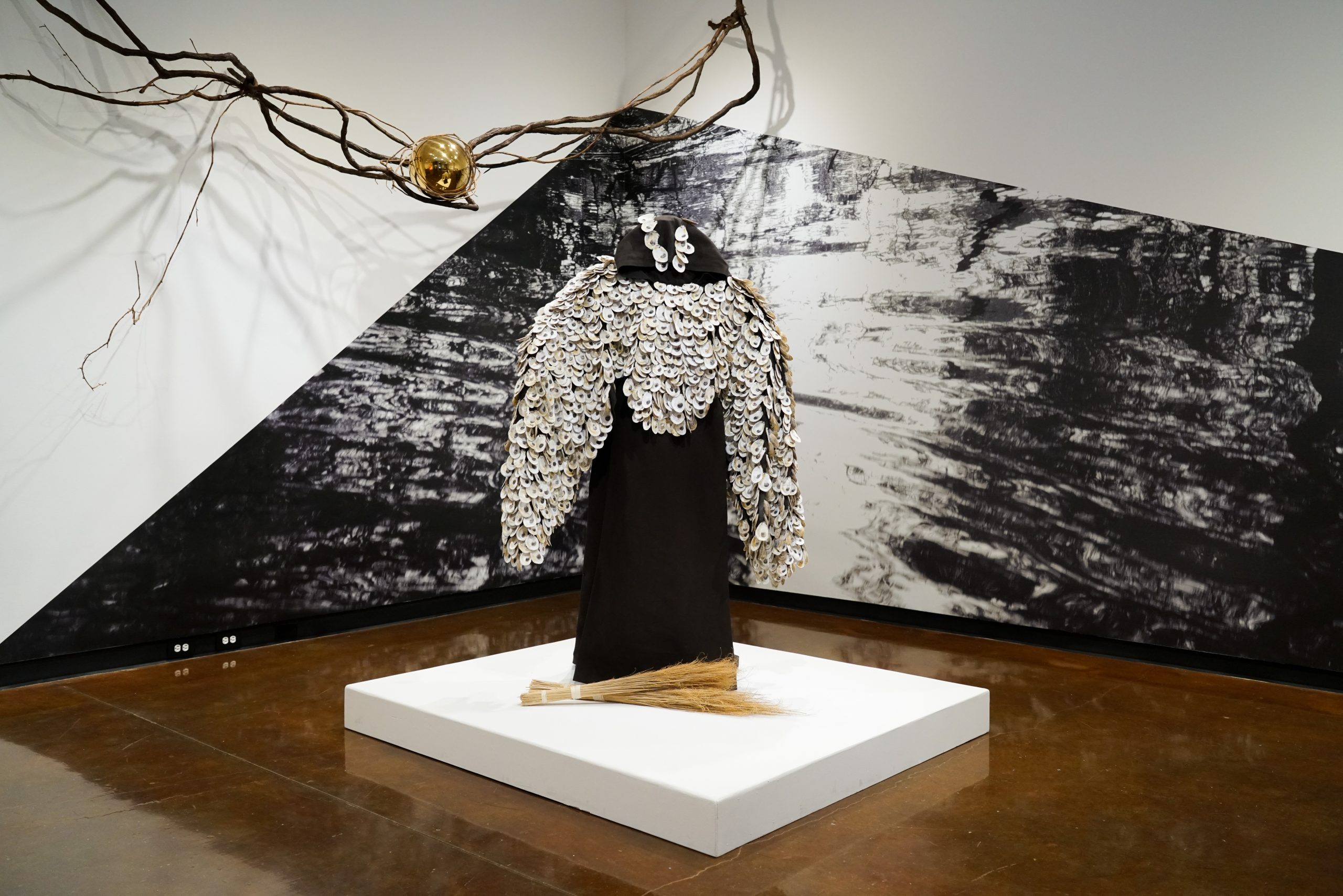
Examining Conduit above, viewers notice river grapevines wrapped around a golden, circular object. The placement of the golden sphere is in the center of the vines and above everything else, comparable to the sun. The sphere acts as an energy or power source for the new world. Additionally, Beasley’s choice to include river grapevines in his piece is significant because the vines act as living witnesses to the past, tying into the idea that the Black Southern experience and knowledge are not bygone, but a living resource to imagine a stronger future like the Reciprocene. Conduit connects nature with power. Working with natural elements, past experience, and accumulated knowledge allows us to strengthen ourselves and the environment around us, building a stronger future together.
By Caroline Richardson, Halsey Institute Intern
College of Charleston, Class of 2025
Art History major with a minor in Marketing